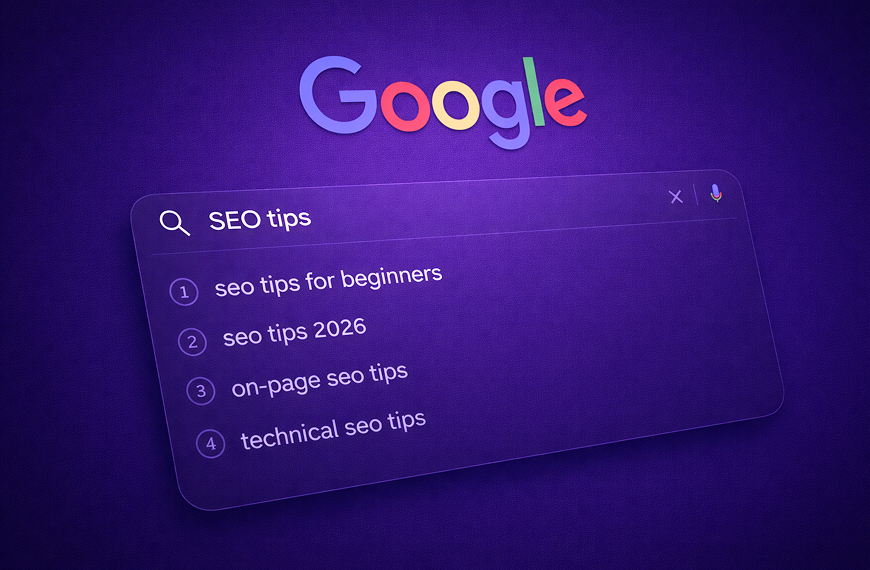
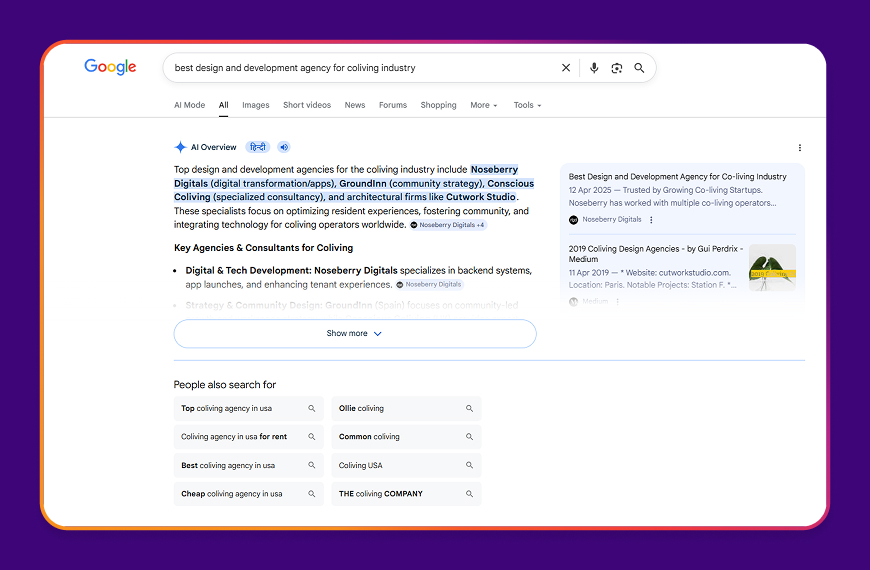
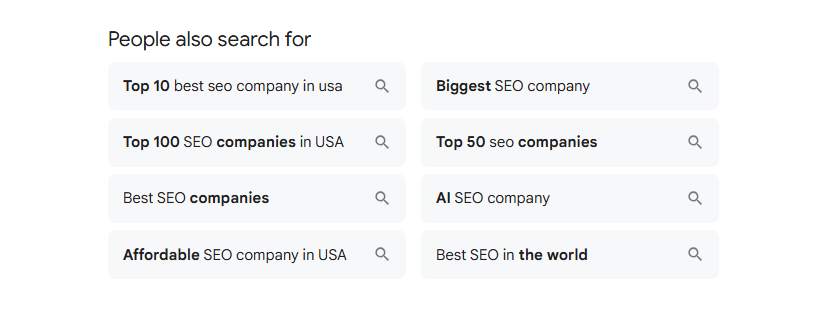
Have you ever searched for something on Google, clicked a result, then hit the back button because the page didn’t quite answer your question? If you have, you’ve probably noticed a new set of suggestions that appear right below the result you just visited. That section is called People Also Search For, and it’s one of the most underused yet powerful features in Google search.
For anyone working in SEO, content marketing, or digital strategy, understanding Google People Also Search For suggestions isn’t just helpful – it is essential. These suggestions reveal exactly what users search for next when their initial query leaves them wanting more. And that kind of insight, when used properly, can reshape the way you plan content, build topic clusters, and capture organic traffic that your competitors are missing.
In this guide, you’ll learn what People Also Search For actually means, how it differs from other SERP features, why it carries real strategic value, and how you can use it inside a practical SEO and content strategy that works in 2026 – including for answer engine optimization and LLM visibility.
What Does People Also Search For Mean?
People Also Search For is a dynamic Google SERP feature that shows related queries after a user clicks on a search result and then returns to the results page. Think of it as Google saying: “Since that result didn’t fully answer your question, here are some related topics other users explored next.”
Unlike the “Related Searches” section at the bottom of the page, which is based on the original query itself, People Also Search For is triggered by post-click behavior. It reflects real refinement patterns – what people actually searched for after engaging with a result.
Here’s a simple way to see it yourself: search for any keyword, click on one of the results, then press the back button. You’ll see a box of suggestions appear directly beneath the result you visited. Those are the People Also Search For terms.
This distinction matters because it tells you something that keyword research tools often can’t: where user intent goes next. And that makes it incredibly useful for building content that satisfies not just the first question, but the second and third as well.
People Also Search For vs. Related Searches vs. People Also Ask: What’s the Difference?
One of the most common points of confusion is the difference between these three Google SERP features. Here’s a clear breakdown:
Feature
Where It Appears
Trigger
What It Reflects
People Also Search For
Below a clicked result (after returning to SERP)
Post-click pogo-stick behavior
Follow-up and refinement queries
Related Searches
Bottom of the SERP
Original query entered
Broad topic associations
People Also Ask
Expandable boxes within the SERP
Original query and semantic relationships
Specific follow-up questions
Understanding these differences helps you know which feature to prioritize for which type of content strategy. People also searched for terms are especially valuable because they reflect genuine user dissatisfaction and curiosity – signals that tell you exactly where a content gap exists.
If your content strategy accounts for all three features, you’re covering the full spectrum of user intent – from initial discovery to deep exploration.
Why People Also Search For Carries Real SEO Value
The value of People Also Search For goes far beyond keyword discovery. Here’s why it genuinely matters for your rankings and content performance.
It uncovers hidden intent layers. Many keywords look straightforward on the surface. But when you check what Google People Also Search For shows underneath them, you discover that users are actually looking for comparisons, pricing, alternatives, or definitions that your page doesn’t address. That gap is exactly why users bounce – and why your competitors might outrank you.
It improves topical completeness. Google’s systems increasingly reward pages that demonstrate depth and authority on a subject. When your content naturally addresses the topics that appear in People Also Search For, you signal to Google that your page covers the subject thoroughly. This aligns directly with how topical authority works in modern SEO.
It reduces guesswork in content planning. Instead of relying solely on keyword volume data from tools, you can use real behavioral signals to decide what sections to include, what questions to answer, and what supporting content to create. People Also Search For gives you a direct view into user journeys that no spreadsheet can replicate.
It supports internal linking decisions. When you see a People Also Search For term that deserves its own dedicated article, you’ve just found a natural internal linking opportunity. Building these connections between pages strengthens your site’s overall SEO performance and helps search engines understand your content architecture.
How People Also Search For Shapes User Search Journeys
How People Also Search For Shapes User Search Journeys
Search journeys rarely follow a straight line. A user might start broad, go narrow, change direction, or seek clarification – and People Also Search For reflects all four of these patterns.
The user narrows the topic
A broad query becomes specific. Someone searching for “CRM software” might see People Also Search For suggestions like “CRM software for real estate agents” or “best CRM for small teams.” This narrowing pattern tells you that your page should address specific use cases, not just generic overviews. If you serve niche industries, pages like your PropTech & Real Estate solutions or E-Commerce platforms should be connected to your broader content.
The user widens the topic
Sometimes the opposite happens. A specific query leads to broader exploration. “Core Web Vitals” might trigger People Also Search For terms like “technical SEO ranking factors” or “site speed optimization.” This is a sign that your content should link outward to broader pillar pages. A solid technical SEO foundation catches exactly this kind of expanding interest.
The user changes intent
Informational queries can shift to commercial ones. “Best email marketing platforms” might evolve into “Mailchimp vs HubSpot pricing.” Google People Also Search For can expose these transitions earlier than traditional ranking reports, helping you create content that bridges informational and transactional intent seamlessly.
The user seeks clarification
Some users need definitions or comparisons before they can take action. “Schema markup” might lead to “structured data examples” or “JSON-LD vs microdata.” Recognizing this pattern means your content should include clear explanations and practical examples – not just theory.
The key insight here is that good SEO isn’t just about matching the first search. It’s about anticipating the second and third. And People Also Search For is one of the clearest signals of where that journey goes next.
How to Find People Also Search For Keywords
Before you can use these terms strategically, you need to know how to find them. Here are the most effective methods:
Manual SERP observation is the simplest and most accurate approach. Search your target keyword in Google, click on a result, press the back button, and note the suggestions that appear. Repeat this with multiple results to see how the suggestions vary. This gives you the purest view of what people also searched for in relation to your topic.
Google Search Console is essential for validating these findings. Look at the “Queries” report to find search terms that drive impressions to your page but have low click-through rates. Many of these will overlap with People Also Search For terms – they represent opportunities you’re visible for but not yet capturing.
SEO platforms like Semrush and Ahrefs offer keyword clustering and related keyword features that can approximate People Also Search For data at scale. These tools are useful for building out larger content strategies, but they should complement manual observation, not replace it. If you don’t have access to paid tools, our free SEO audit tool can help you identify content gaps and keyword opportunities on your existing pages.
Browser extensions designed for SERP analysis can also capture People Also Search For data automatically as you browse, saving you time during research.
Once you’ve collected these terms, the next step is deciding how to use them – which brings us to the strategic framework.
How to Use People Also Search For Inside Your SEO Strategy
Not every People Also Search For term belongs on the same page. The key is matching each term to the right content format based on its intent and depth.
Cover on the same page when: The term is a natural sub-question of your main topic, the user would expect it answered without needing a separate page, and including it improves completeness without diluting your focus.
Create a separate supporting page when: The term has distinct intent that deserves its own detailed treatment, it needs its own examples, process walkthrough, or use cases, and combining it would make the main article unfocused and overly long.
Use as an internal link when: The term reflects a next-step query, a dedicated supporting article already exists on your site, and you want to guide readers deeper into a topic cluster.
For example, if your main page targets “People Also Search For,” supporting pages might cover “how to do keyword research for SEO,” “what is search intent,” or “how to build content clusters.” Each page links back, creating a connected ecosystem that strengthens your entire digital marketing presence.
This framework also works for planning content around analytics and conversion optimization topics, where user journeys tend to branch into multiple comparison and “how-to” queries.
Making Your Content Align With People Also Searched For Suggestions
There is no official Google setting or tag that guarantees your page will appear in the People Also Search For box. But you can structure your content so that it naturally aligns with the kinds of queries that show up there.
Start with intent coverage. If users who search your keyword commonly branch into comparisons, definitions, costs, or examples, make sure your page addresses those angles. Don’t wait for users to search again – give them the answer before they leave.
Improve information scent. Your headings should make it immediately clear what topics the page covers. A reader scanning your H2s should see that the page answers their current question and their likely next question too. This reduces pogo-sticking, which is the exact behavior that triggers People Also Search For suggestions.
Use semantically related language naturally. This doesn’t mean keyword stuffing. It means writing the way a genuine expert would – using related terms, industry terminology, and contextual phrases that help Google understand the full scope of your content. If you’re writing about People Also Search For, naturally mentioning search intent, SERP features, content gaps, and keyword clustering helps search engines place your content correctly.
Add concise answer blocks. Many people also searched for queries are short and direct. Including brief, clear answers beneath descriptive sub-headings helps both users and AI systems extract useful information from your page. Think of these as mini featured-snippet opportunities within your article.
Refresh content based on real behavior. Check your analytics data regularly. If a page ranks but users consistently return to Google to search again, the page isn’t satisfying intent. Use People Also Search For data to identify what’s missing, then update accordingly.
A Practical Content Model: Core, Branch, and Bridge
A helpful way to structure content around People Also Search For is the Core, Branch, and Bridge model.
Core is the primary intent your page targets. For this article, that’s “People Also Search For meaning and how to use it for SEO.”
Branch covers the follow-up directions users naturally take. These include topics like how People Also Search For works, why it matters, how to find the keywords, how it compares to Related Searches and People Also Ask, and specific optimization techniques.
Bridge connects the topic to broader strategic goals. These are the transitions that tie People Also Search For into wider themes like topical authority, content cluster strategy, performance marketing, and answer engine optimization.
Pages built with this model perform better because they don’t stop at the definition. They satisfy the initial query, address natural follow-ups, and then connect the reader to deeper, related content – exactly the kind of experience that both Google and AI systems reward.
Tools That Help Measure PASF-Related Keyword Opportunities
There’s no standalone Google report labeled “PASF performance,” so you need to assemble your measurement approach from multiple sources.
Google Search Console is your most important starting point. It shows actual queries, clicks, impressions, and page-level performance. Filter for long-tail queries related to your target keyword to see which People Also Search For terms you’re already appearing for.
Semrush and Ahrefs help you cluster related keywords, track rankings across related phrases, and identify SERP feature overlap. They’re particularly useful for discovering which of your competitors rank for People Also Search For-adjacent terms that you’re not yet targeting.
Manual SERP review remains one of the most underrated methods. Search your keyword, review what Google People Also Search For shows, compare top-ranking pages, and note sections that your content is missing. This hands-on research often reveals more than any automated report.
Your own site analytics also provide powerful signals. If users land on your page and continue exploring your related content – moving from this article to your SEO intelligence tool or your website auditor, for example – that is a strong signal of intent satisfaction. If they exit immediately, your page likely isn’t answering the next obvious question.
A practical set of KPIs for People Also Search For work includes growth in impressions for adjacent queries, increased long-tail keyword coverage, stronger engagement on supporting articles, more internal click-throughs to related pages, and improved visibility across your topic cluster.
Where People Also Search For Fits in Modern SEO, AEO, and LLM Strategy
People Also Search For isn’t a standalone tactic. It works best as part of a broader search strategy that includes traditional SEO, answer engine optimization, and visibility in large language models.
In traditional SEO, People Also Search For supports keyword clustering, content brief development, topic mapping, FAQ planning, internal linking strategy, and content refresh workflows. It’s a practical input that improves nearly every phase of the content lifecycle.
In answer engine optimization (AEO), the logic is similar but the stakes are higher. AI-powered search experiences – from Google’s AI Overviews to tools like ChatGPT and Perplexity – reward content that covers a topic and its surrounding context comprehensively. Content that answers the main question and its natural follow-ups is more likely to be selected as a source for AI-generated answers.
In LLM visibility, structured content with clear question-answer formatting, strong topical depth, and authoritative sourcing has a better chance of being referenced when language models generate responses. If your content addresses the same queries that appear in Google People Also Search For, you’re essentially training your pages to be useful across both traditional and AI-driven search environments.
This means that a well-executed People Also Search For strategy isn’t just an SEO play. It’s a future-proof approach to being visible wherever people search – whether that’s a Google results page, an AI chat interface, or a voice assistant. Pairing this approach with solid marketing automation ensures your content reaches users at every stage of their journey.
Final Thoughts
People Also Search For is one of the clearest windows into how real search journeys unfold. It shows you where users go after their first click fails, what questions they ask next, and where your content has gaps that competitors might be filling.
When you use it well, you don’t just rank for a single keyword. You build pages that answer the whole question – and the questions after it. That’s the kind of content that earns sustainable rankings in Google, gets cited by answer engines, and stays relevant as AI-driven search continues to evolve.
People Also Search For is a Google feature that displays related queries after a user clicks a search result and returns to the SERP. In SEO, it reveals follow-up intent and content gaps — helping you build pages that answer not just the first question, but the natural next ones too.
No. Related Searches appear at the bottom of the SERP and are based on the original query. People Also Search For appears after a user clicks a result and comes back, making it a post-click refinement signal. It’s generally more useful for understanding what users searched for next.
There’s no guaranteed method. Google generates these suggestions algorithmically based on user behavior. However, you can improve your chances by creating content that covers related subtopics thoroughly, uses clear heading structures, and satisfies intent so completely that users don’t need to search again.
The simplest method is manual SERP observation — search your keyword, click results, return to the SERP, and note the suggestions. You can also use Google Search Console, Semrush, Ahrefs, and our free SEO audit tool to discover related keyword opportunities at scale.
Yes. The queries that appear in People Also Search For reflect topic expansion and follow-up questions — exactly what AI systems use to evaluate content depth. Pages that address these related queries comprehensively are more likely to be cited by answer engines like Google AI Overviews and ChatGPT.
Google personalizes SERP features based on context, device, location, search history, and query wording. The People Also Search For suggestions you see may differ from what another user sees for the same keyword. This is why manual observation across multiple sessions gives you the most complete picture.
Yes. The queries that appear in People Also Search For reflect topic expansion and follow-up questions — exactly what AI systems use to evaluate content depth. Pages that address these related queries comprehensively are more likely to be cited by answer engines like Google AI Overviews and ChatGPT.
People Also Ask shows expandable question-and-answer boxes within the SERP, triggered by semantic analysis of the original query. People Also Search For shows related search queries triggered by post-click behavior. Both are valuable, but they serve different strategic purposes in your content planning.



 Services