


-
Services
Services
Offerings
Learn moreSaaS Development

Web Application Development
Native & Cross-Platform Mobile Apps
Enterprise Software Solutions
API Architecture & Integration
Legacy System Modernization

Time Tracking Web App: Streamlining Productivity with a Custom Enterprise SaaS Solution.
Read case study
Offerings
Learn moreUser Research & Persona Mapping
UX Strategy & Wireframing
UI Design Systems & Libraries
Micro-Interactions & Motion Design
Offerings
Learn moreData Pipeline Design & Development
ETL & Data Warehousing
BI Dashboards & Advanced Reporting
Data Visualization & Analytics
Data Migration & Integration Optimization
Offerings
Learn moreMarketing & Sales Automation
Performance Marketing
Email & WhatsApp Campaigns
SEO & Content Strategy
Analytics & Conversions
CRM Implementation & Integration
Offerings
Learn moreCloud Architecture Design
CI/CD Pipeline Automation
Container Orchestration & Microservices
Cloud Migration & Cost Optimization
AIOps-Powered Intelligence
Cloud Security & Compliance
Share your project details
Share your details with us, and we'll reach out to discuss your needs.
Enquire now
Offerings
Learn moreMachine Learning
Generative AI
Conversational AI & Virtual Agents
Computer Vision Applications
AI-Powered Process Automation
AI Strategy & Consulting
Share your project details
Share your details with us, and we'll reach out to discuss your needs.
Enquire now
- Company



 Services

Scope of work
Structured social media execution, sales communication support, a print & outdoor advertising.
Industry
Real Estate (NCR)
Project timeline
2.5 Years
Project goal
Streamline design asset management and performance campaigns to double audience engagement and boost campaign ROI.
Since 2022, Noseberry has managed our design assets, printables, and performance campaigns, consistently delivering excellence. Their proactive team makes collaboration a pleasure.

Sheetal Kumar Agrawalla
Managing Director
3000+
creatives delivered
13
projects promoted
Inspired by our work?
Download the full case study.
Table of contents
More from Proptech and Real Estate
Overview
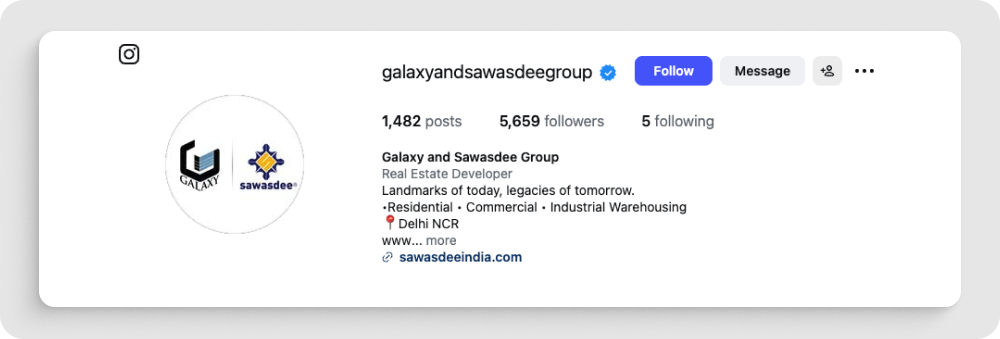
Galaxy & Sawasdee Group is a real estate developer operating across residential, commercial, and industrial segments in the National Capital Region (NCR). During the engagement, the organization was managing 13 active projects across multiple micro-markets, each with different demand patterns, timelines, and buyer profiles.
At this scale, marketing effectiveness depends not only on visibility but on coordination. The requirement was to move from fragmented, project-level promotion to a structured execution model that could consistently support sales teams while strengthening brand visibility and recall across competitive local markets.
The engagement focused on building a repeatable system that could operate continuously, adapt to changing project priorities, and remain aligned with real buyer and broker behavior.

The Challenge
Although market demand existed, marketing outcomes were constrained by execution-level gaps rather than lack of activity.
Key challenges included:
- Brand visibility is largely concentrated within broker ecosystems, limiting direct exposure to end buyers
- Multiple channels are being used without clearly defined roles or responsibilities
- Simultaneous promotion of several projects increases noise and reduces recall
- Difficulty maintaining consistency across projects with different urgency levels
- Absence of a scalable system to sustain execution over time
- The core issue was not awareness creation but coordinating market 11’s presence at scale in a disciplined and repeatable manner.
The Objective
The engagement was guided by two interrelated objectives addressing both immediate and long-term business needs.
The first objective was to increase sales inquiries across residential and commercial units. This required tighter alignment between marketing execution and sales priorities, ensuring timely and relevant communication with high-intent audiences.
The second objective was to expand brand awareness beyond broker-led networks. While brokers remained critical to sales, long-term brand strength required public-facing visibility and credibility among buyers and investors outside those networks.
Together, these objectives required balancing near-term sales enablement with sustained brand building.

The Solution
The solution was designed as a structured, role-based execution model, rather than a set of isolated campaigns. The focus was on building a system that could operate consistently across projects, channels, and time while remaining flexible enough to respond to shifting sales priorities.
Market-Informed Foundation
Structured market research formed the foundation of the solution. This research examined buyer intent patterns, broker communication workflows, channel effectiveness across funnel stages, project-level sales urgency, competitive visibility across NCR micro-markets, and cultural demand cycles. These insights ensured that execution decisions were grounded in observed behavior rather than assumptions.
Channel Role Architecture
Based on research findings, a clear channel architecture was defined, assigning each channel a distinct and non-overlapping role:
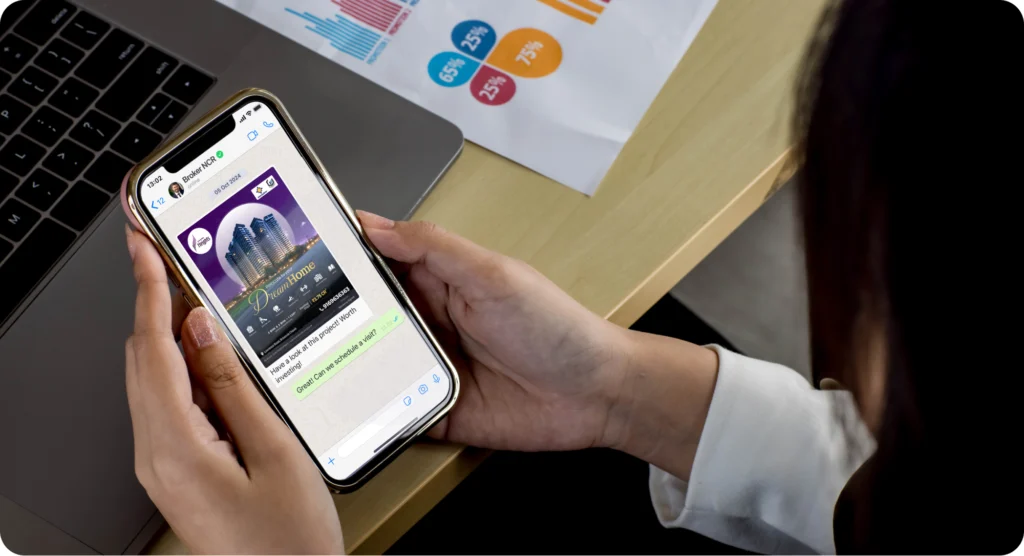
WhatsApp – Sales Enablement & Conversion Support
WhatsApp was positioned as the primary channel for high-intent engagement. Daily sales creatives were produced and distributed through broker networks to support real-time information sharing, inventory updates, and deal progression. This ensured marketing activity directly supported on-ground sales efforts.
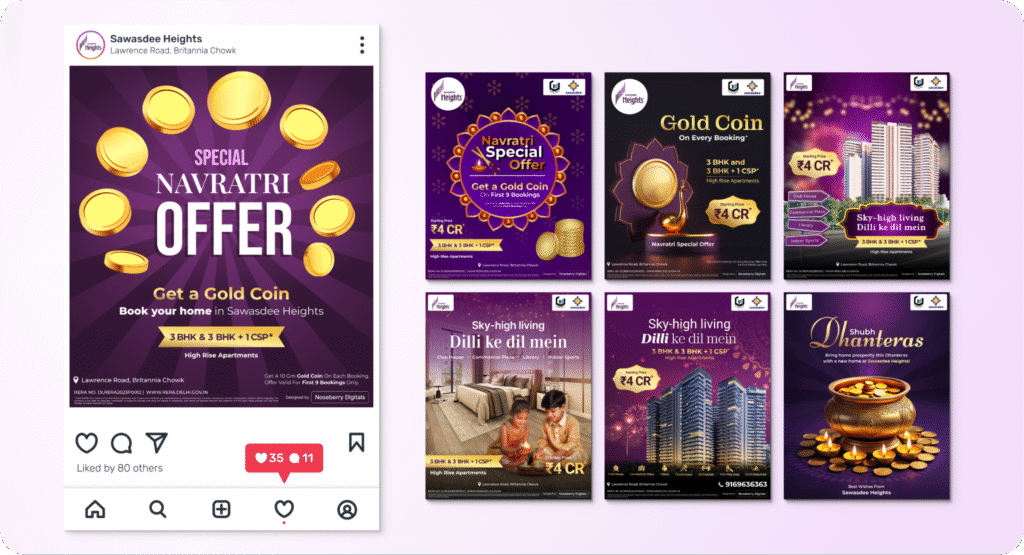
Social media – Awareness, Credibility, and Public Visibility
Social media platforms were used to establish consistent public-facing visibility for priority projects. Content highlighted project features, progress updates, and visual storytelling to reinforce brand legitimacy among broader audiences, including buyers outside broker networks.
Print & Outdoor – Trust Reinforcement and Regional Recall
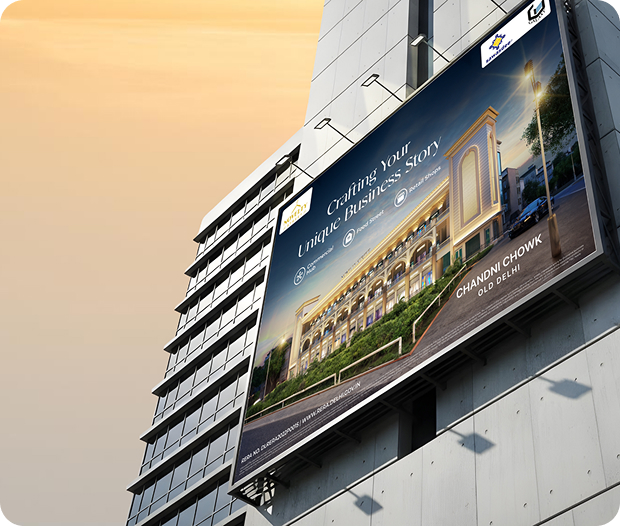
Print and outdoor advertising strengthened offline presence in high-traffic NCR micro-markets. Billboards and newspaper placements acted as trust signals, reinforcing brand recall during high-consideration purchase decisions.
Execution Structure & Operating Rhythm
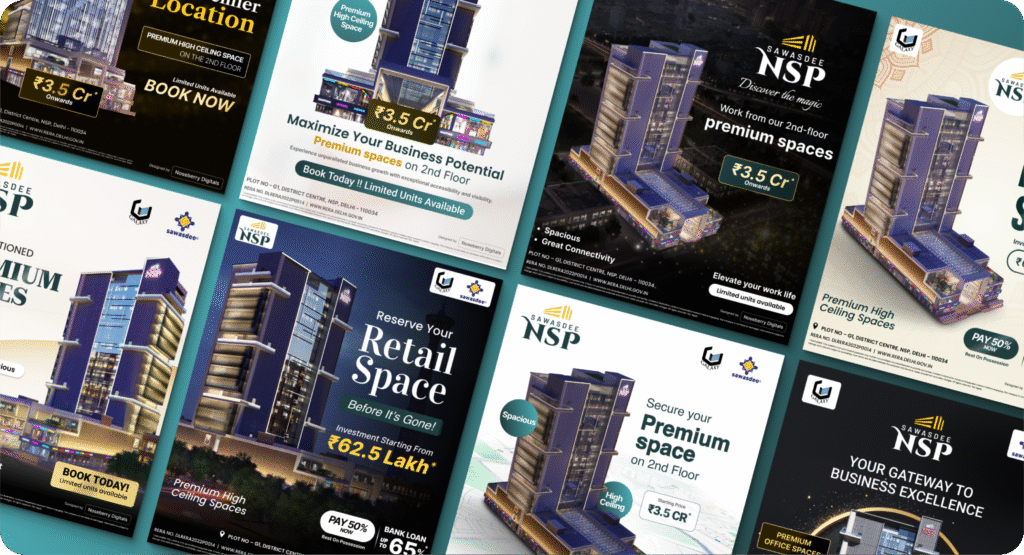
Execution emphasized consistency, relevance, and scalability. A centralized creative system enabled daily output across multiple projects while maintaining visual and messaging alignment. Project prioritization was reviewed regularly, allowing resources to be dynamically allocated based on sales urgency.
Creative themes were adapted during cultural and festive periods to reflect prevailing buyer sentiment, while maintaining overall brand coherence.
Over time, this established a repeatable operating rhythm:
- Daily sales communication for priority projects
- Continuous social media presence to sustain visibility
- Periodic offline reinforcement in key micro-markets
- Ongoing review of priorities and channel performance
The Impact
The structured execution model led to sustained improvements across visibility, recall, and sales support.
Key outcomes included:
- More consistent brand visibility across NCR micro-markets
- Improved inquiry flow across multiple active projects
- Stronger brand recall among brokers and end buyers
- Better alignment between marketing execution and sales priorities
- Marketing evolving from fragmented activity into a repeatable operating model
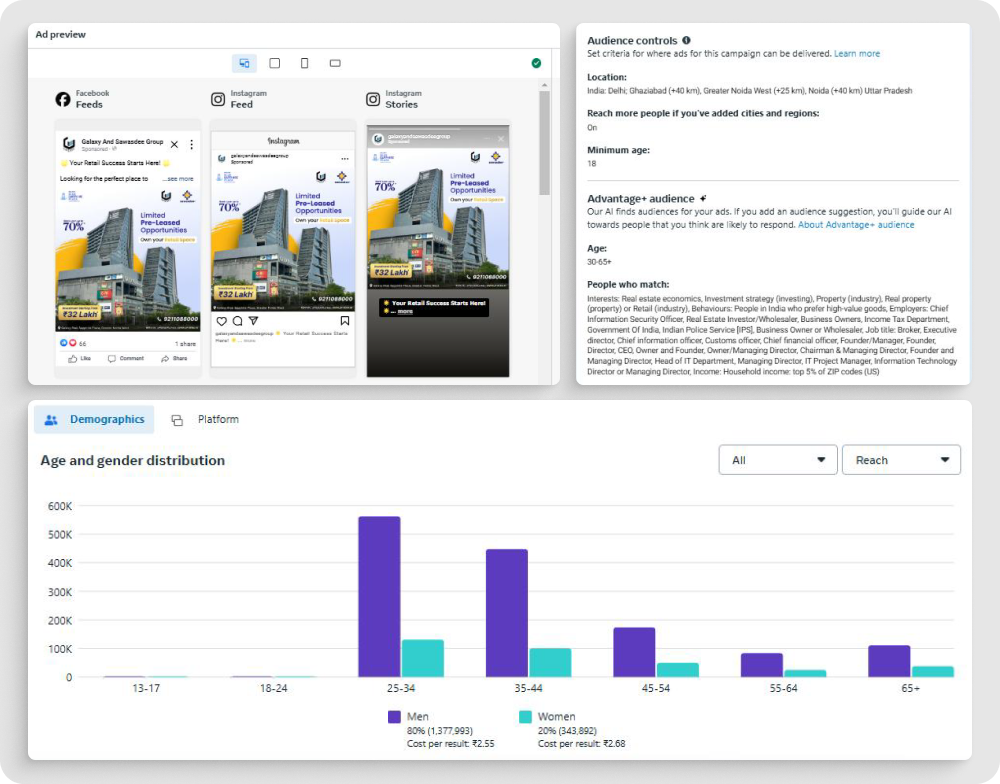
Quantified impact:
- 13 active projects supported across residential, commercial, and industrial segments
- 2.5+ years of continuous execution (August 2022 – January 2025)
- 3,000+ sales and brand creatives produced and deployed
- Daily sales communication enabled through WhatsApp broker networks
- 4 priority projects actively managed on social media at any given time
- Coverage across multiple NCR micro-markets through digital, print, and outdoor presence
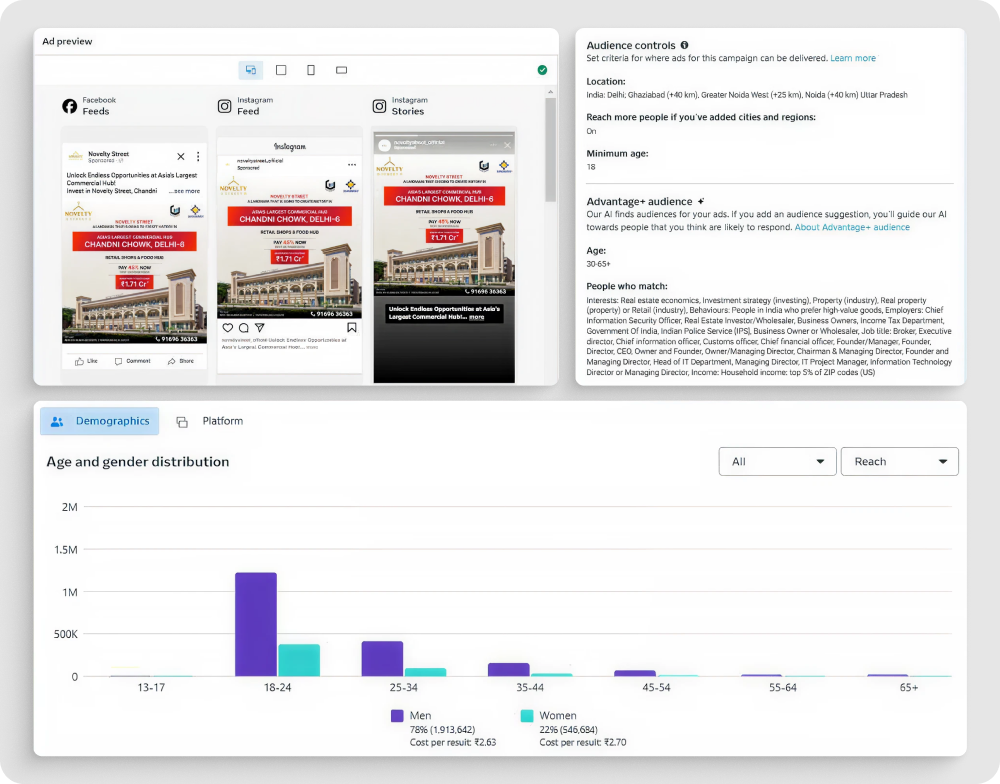
Overall, the engagement demonstrates how disciplined execution guided by market research and clear channel roles can convert fragmented promotion into coordinated market presence, supporting sustained sales momentum at scale.
Conclusion
This engagement illustrates how structured execution, informed by market research and clear channel roles, can improve visibility and sales support in competitive real estate markets. By shifting from fragmented promotion to a repeatable operating model, Galaxy & Sawasdee Group achieved more consistent brand presence across micro-markets. The approach enabled sustained sales support while strengthening long-term brand recall.


